
Stop Wondering What to Post Every Day—Plan the Next 90 Days Instead
One of the biggest challenges businesses face isn’t creating content—it’s deciding what to post next.
Many business owners open Instagram, Facebook, or LinkedIn every morning wondering:
“What should we post today?”
This last-minute approach often leads to inconsistent posting, lower engagement, and missed marketing opportunities.
In 2026, successful businesses no longer create content one day at a time.
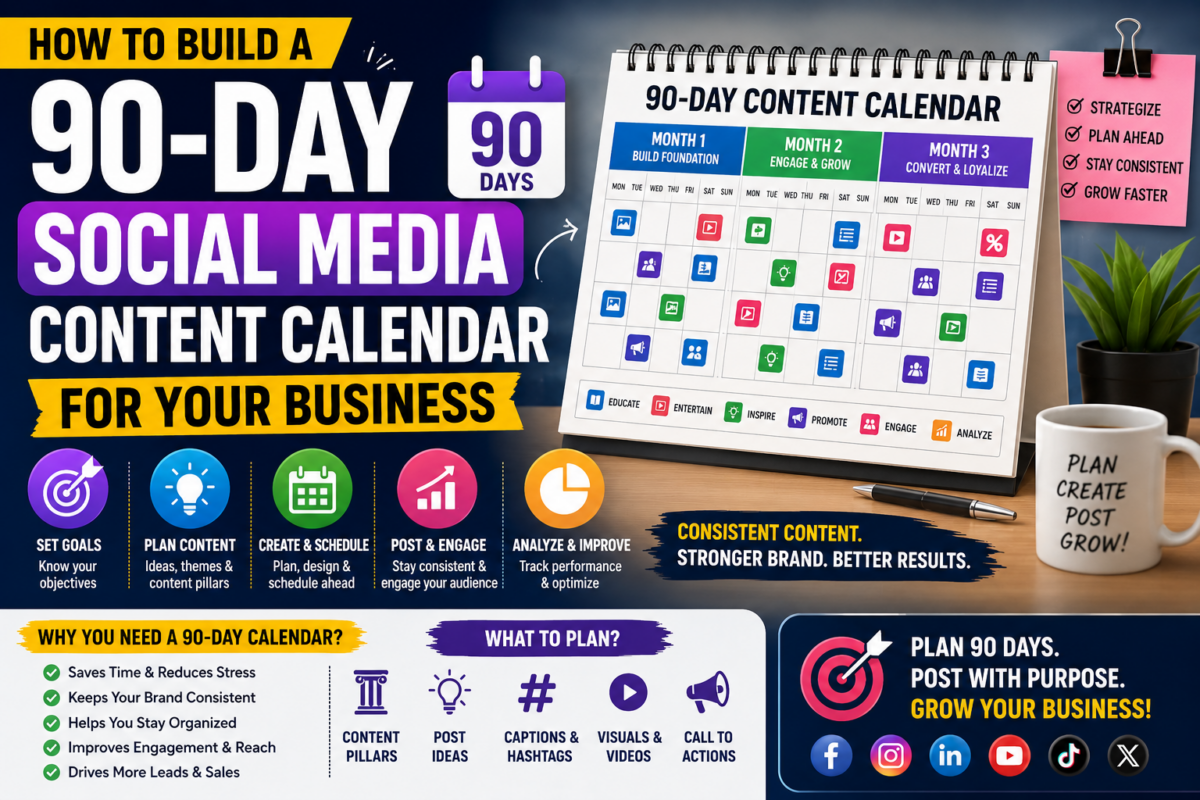
They plan their content months in advance using a structured 90-day social media content calendar.
A well-planned content calendar helps businesses stay consistent, improve engagement, strengthen brand awareness, and generate more leads without daily stress.
This guide explains exactly how to build a powerful 90-day content calendar that works across Facebook, Instagram, LinkedIn, X, YouTube, and other social media platforms.
Why It Matters
Many businesses struggle with social media because they:
❌ Post only when they have time
❌ Focus only on selling
❌ Run out of content ideas
❌ Ignore audience interests
❌ Miss important seasonal events
❌ Inconsistently publish content
The result?
Lower reach.
Poor engagement.
Fewer leads.
Reduced brand visibility.
Businesses that plan content consistently outperform those posting randomly.
What You Will Learn
By the end of this guide, you’ll learn:
✅ Why every business needs a content calendar
✅ How to plan 90 days of content
✅ Content categories that drive engagement
✅ Weekly posting strategy
✅ AI tools that speed up content planning
✅ Best posting frequency in 2026
✅ Common social media planning mistakes
Table of Contents
- Why Content Planning Matters
- Benefits of a 90-Day Content Calendar
- Define Your Business Goals
- Know Your Audience
- Choose Your Content Pillars
- Weekly Content Framework
- Monthly Content Planning
- AI Tools for Content Creation
- Measuring Performance
- Common Mistakes
- Example 90-Day Calendar
- Frequently Asked Questions
- Conclusion
Why Content Planning Matters
Successful social media marketing is built on consistency.
Posting regularly helps businesses:
Increase visibility
Build customer trust
Improve engagement
Generate leads
Strengthen brand recognition
Planning ahead also saves time and reduces daily decision-making.
Benefits of a 90-Day Content Calendar
A structured content calendar provides:
Consistent posting
Better organization
Higher productivity
Improved campaign planning
Stronger branding
More strategic marketing
Businesses that plan ahead can also align content with product launches, holidays, promotions, and industry events.
Step 1: Define Your Marketing Goals
Before creating content, identify your primary objective.
Examples include:
Brand awareness
Lead generation
Website traffic
Sales
Community building
Customer education
Recruitment
Your content should support these goals throughout the 90-day period.
Step 2: Understand Your Audience
Know who you’re creating content for.
Identify:
Age group
Location
Interests
Challenges
Buying behavior
Preferred social platforms
Questions they frequently ask
The better you understand your audience, the more relevant your content becomes.
Step 3: Choose Your Content Pillars
Content pillars are the main themes your brand consistently discusses.
Examples for a digital marketing agency:
SEO Tips
Google Ads
Meta Ads
Website Development
AI Marketing
Case Studies
Client Success Stories
Industry News
Business Tips
Behind-the-Scenes
Using 5–8 content pillars keeps your feed organized and valuable.
Step 4: Build a Weekly Posting Framework
Instead of creating random posts, assign a theme to each day.
Example:
Monday: Marketing Tips
Tuesday: Client Success Story
Wednesday: Educational Carousel
Thursday: Behind-the-Scenes
Friday: Industry News
Saturday: Team Spotlight
Sunday: Motivational or Community Post
This framework makes planning much easier.
Step 5: Plan Content for 90 Days
Divide your calendar into three months.
Month 1 – Build Awareness
Introduce your business
Share educational content
Highlight services
Showcase your team
Publish industry tips
Month 2 – Build Trust
Share testimonials
Publish case studies
Answer FAQs
Post customer success stories
Demonstrate expertise
Month 3 – Generate Leads
Promote offers
Launch campaigns
Publish free resources
Share consultation opportunities
Encourage inquiries
Content Types to Include
Create a balanced mix of content.
Educational Posts
How-to Guides
Infographics
Videos
Carousels
Polls
Behind-the-Scenes
Customer Reviews
FAQs
Industry News
Product Highlights
Company Updates
Employee Stories
User-Generated Content
Event Announcements
Promotional Campaigns
The 80/20 Content Rule
Avoid constantly selling.
A proven strategy is:
80% Valuable Content
20% Promotional Content
Educate first.
Sell second.
This builds trust over time.
AI Tools for Content Planning
AI can significantly improve productivity.
Use AI for:
Content ideas
Captions
Hashtag suggestions
Content repurposing
Content scheduling
Image generation
Video scripting
Keyword research
Always review AI-generated content before publishing.
Repurpose Your Best Content
One blog can become:
Instagram Carousel
LinkedIn Article
Facebook Post
Short Video
Email Newsletter
YouTube Short
Infographic
Repurposing saves time while increasing reach.
Monitor Performance Every Month
Track key metrics such as:
Reach
Engagement
Shares
Comments
Website clicks
Lead generation
Follower growth
Conversions
Use insights to improve future content.
Common Content Planning Mistakes
Avoid these mistakes:
❌ Posting only promotional content
❌ Ignoring audience interests
❌ Inconsistent branding
❌ Publishing low-quality visuals
❌ Never analyzing performance
❌ Copying competitors
❌ Posting without clear objectives
Example 90-Day Content Calendar
| Week | Primary Focus |
| Week 1 | Brand Introduction |
| Week 2 | Educational Content |
| Week 3 | Customer Success Stories |
| Week 4 | Industry Insights |
| Week 5 | Service Highlights |
| Week 6 | FAQs |
| Week 7 | Behind-the-Scenes |
| Week 8 | Team Culture |
| Week 9 | Free Resources |
| Week 10 | Client Testimonials |
| Week 11 | Product or Service Launch |
| Week 12 | Promotional Campaign |
Social Media Planning Workflow
Business Goals
↓
Audience Research
↓
Content Pillars
↓
Monthly Planning
↓
Weekly Calendar
↓
Content Creation
↓
Scheduling
↓
Publishing
↓
Performance Analysis
↓
Optimization
Frequently Asked Questions
Why should I create a 90-day content calendar?
It improves consistency, saves time, and supports long-term marketing goals.
How often should businesses post?
Quality and consistency matter more than posting excessively.
Which platforms should I focus on?
Choose platforms where your target audience is most active.
Can AI create my content?
AI can assist, but human editing and brand voice remain essential.
Should every post sell something?
No. Educational and relationship-building content should make up most of your calendar.
How many content pillars should I have?
Typically between five and eight.
Can I reuse old content?
Yes. Repurposing successful content is highly effective.
What content performs best?
Educational, helpful, authentic, and visually engaging content.
How do I measure success?
Track engagement, reach, leads, website traffic, and conversions.
Should I update my calendar?
Yes. Review and optimize your calendar every month based on performance.
Key Takeaways
- Plan content 90 days in advance.
- Focus on audience needs.
- Create consistent content pillars.
- Balance educational and promotional posts.
- Repurpose successful content.
- Use AI to improve productivity.
- Monitor analytics regularly.
- Stay consistent across all platforms.
- Build trust before selling.
- Continuously optimize your strategy.
Final Thoughts
Social media success in 2026 isn’t about posting more—it’s about posting with purpose.
A well-planned 90-day content calendar gives your business a clear direction, improves consistency, and allows you to create valuable content that builds trust and drives meaningful engagement.
Rather than scrambling for ideas every day, invest time in planning ahead. By aligning your content with business goals, audience interests, and seasonal opportunities, you’ll create a stronger online presence and generate better results across every social platform.
Whether you’re a startup, local business, or established brand, a strategic content calendar is one of the simplest and most effective ways to improve your digital marketing efforts.