
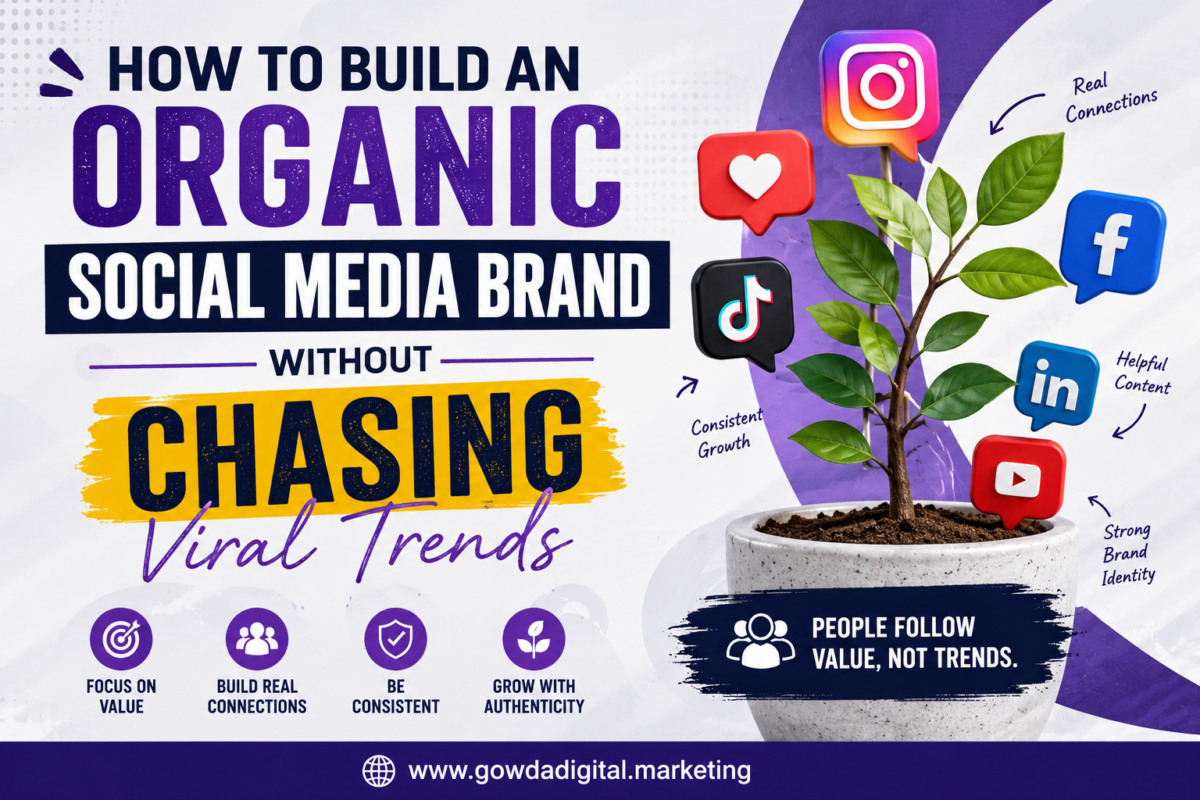
Every week, a new social media trend appears.
One week it’s a trending audio.
The next week it’s an AI filter.
Then a viral challenge.
Businesses often feel pressured to participate in every trend just to stay relevant.
But here’s the reality:
Most viral posts create temporary attention—not lasting brand value.
A post with one million views means very little if it doesn’t attract the right audience or generate meaningful business opportunities.
The businesses growing consistently in 2026 are taking a different approach.
Instead of chasing trends, they focus on building recognizable brands, publishing valuable content, and developing genuine relationships with their audience.
This guide explains how to build an organic social media brand that continues to grow long after today’s trends disappear.
Problem Statement: Why It Matters
Many businesses experience:
- Short bursts of attention
- Inconsistent engagement
- Poor brand recognition
- Limited customer loyalty
- Low conversion rates
because they prioritize trends over strategy.
Common results include:
❌ Irrelevant followers
❌ Weak community engagement
❌ Content inconsistency
❌ Difficulty standing out
❌ Dependence on platform algorithms
Promise of Value
By the end of this guide, you’ll learn:
✅ Why organic branding outperforms viral marketing
✅ How to develop a long-term content strategy
✅ The importance of consistency and trust
✅ How to grow a loyal audience
✅ Practical frameworks for sustainable social media growth
Table of Contents
- Why Viral Content Isn’t Enough
- What Makes an Organic Brand Strong
- Define Your Brand Identity
- Create Content Pillars
- Build a Community
- Consistency Over Virality
- Measuring Organic Success
- Common Mistakes
- FAQs
- Conclusion
Featured Snippet Section
How Do You Build an Organic Social Media Brand Without Chasing Viral Trends?
To build an organic social media brand without chasing viral trends, define a clear brand identity, understand your audience, create valuable content around consistent content pillars, engage with your community, publish regularly, maintain a recognizable visual style, and measure long-term engagement rather than short-term reach. Sustainable growth comes from trust, consistency, and delivering ongoing value.
Key Facts & Statistics Box
📊 Organic Social Media Insights
- Consistent publishing often strengthens brand recognition.
- Community engagement contributes to long-term customer loyalty.
- Educational and helpful content frequently outperforms trend-based content over time.
- Returning followers are often more valuable than one-time viral viewers.
- Strong branding improves customer trust and recall.
Why Viral Content Isn’t Enough
Going viral can increase visibility.
However, visibility alone doesn’t guarantee:
- Sales
- Customer loyalty
- Brand trust
- Repeat business
A viral post may attract millions of views, but many viewers may never become customers.
Long-term business growth requires more than attention.
Highlight Box
🚀 Pro Tip:
Aim to become recognizable, not just popular. A recognizable brand creates loyal customers, while popularity often fades with the next trend.
What Makes an Organic Brand Strong?
Strong brands consistently communicate:
- Clear values
- A recognizable visual identity
- Helpful content
- Authentic communication
- Customer-focused messaging
People follow brands they trust—not just brands that entertain them.
Step 1 – Define Your Brand Identity
Ask yourself:
- What does your business stand for?
- What problems do you solve?
- Who is your ideal audience?
- What makes your business different?
Your identity should influence every piece of content.
Step 2 – Understand Your Audience
Instead of asking:
“What trend should we follow?”
Ask:
“What does our audience need today?”
Research:
- Frequently asked questions
- Pain points
- Buying motivations
- Industry challenges
- Customer goals
Audience-focused content consistently performs better.
Step 3 – Create Content Pillars
Build your strategy around recurring themes.
Example for a Digital Marketing Agency:
Educational Content
- SEO tips
- Google Ads guides
- AI marketing
Case Studies
- Client success stories
- Campaign results
- Before-and-after examples
Behind-the-Scenes
- Team culture
- Daily operations
- Project workflows
Industry News
- Algorithm updates
- Marketing trends
- Business insights
Promotional Content
- Services
- Offers
- Consultations
A balanced mix keeps your feed valuable and consistent.
Step 4 – Maintain Brand Consistency
Consistency includes:
- Logo placement
- Brand colors
- Typography
- Tone of voice
- Messaging
- Posting frequency
Consistency builds familiarity.
Familiarity builds trust.
Comparison Table
Trend-Chasing vs Organic Brand Building
| Trend-Chasing Strategy | Organic Branding Strategy |
| Short-Term Attention | Long-Term Trust |
| Inconsistent Messaging | Consistent Identity |
| Temporary Engagement | Loyal Community |
| Algorithm Dependence | Audience Loyalty |
| High Reach, Low Retention | Sustainable Growth |
| Random Content | Strategic Content |
Step 5 – Focus on Community Engagement
Reply to:
- Comments
- Messages
- Mentions
Ask questions.
Encourage conversations.
Celebrate customer success.
A strong community is more valuable than a large follower count.
Expert Opinion
“The most successful brands on social media aren’t built on a single viral post—they’re built through hundreds of consistent, valuable interactions over time.”
Step 6 – Publish Consistently
Consistency beats intensity.
A practical schedule might include:
- 3–5 feed posts per week
- Daily Stories
- 2–3 short-form videos weekly
- One educational carousel each week
Create a content calendar and batch-produce content whenever possible.
Step 7 – Tell Stories
Stories create emotional connections.
Share:
- Customer transformations
- Business lessons
- Team experiences
- Challenges you’ve overcome
- Success milestones
People remember stories more than promotional messages.
Step 8 – Measure the Right Metrics
Instead of focusing only on views, monitor:
- Saves
- Shares
- Comments
- Profile visits
- Website clicks
- Leads
- Customer inquiries
- Repeat engagement
These metrics better reflect long-term brand growth.
Step-by-Step Visual Framework
Brand Identity
↓
Audience Research
↓
Content Pillars
↓
Content Calendar
↓
Consistent Publishing
↓
Community Engagement
↓
Performance Analysis
↓
Optimization
↓
Organic Brand Growth
Case Study 1
Local Fitness Studio
Challenge:
Low engagement despite posting trendy content.
Solution:
- Shifted to educational fitness tips
- Shared client success stories
- Posted consistently
Results:
- More loyal followers
- Increased memberships
- Better engagement
Case Study 2
B2B Marketing Agency
Challenge:
Content lacked direction.
Strategy:
- Defined content pillars
- Created weekly educational series
- Highlighted client results
Results:
- Increased inquiries
- Stronger brand authority
- Higher-quality leads
Common Organic Branding Mistakes
❌ Posting only promotional content
❌ Copying competitors
❌ Chasing every trend
❌ Ignoring audience feedback
❌ Inconsistent branding
❌ Giving up too early
❌ Measuring only follower count
10 Frequently Asked Questions
1. Can a business grow without viral content?
Yes. Consistent, valuable content can drive sustainable growth.
2. How often should I post?
Post consistently based on your resources and audience expectations.
3. What are content pillars?
Core themes that guide your content strategy.
4. Should I ignore trends completely?
No. Use trends selectively when they genuinely align with your brand.
5. What is more important: followers or engagement?
Meaningful engagement usually provides greater business value.
6. How long does organic growth take?
Organic brand building is a long-term process that rewards consistency.
7. Can small businesses compete organically?
Absolutely. Authenticity and expertise often outperform large budgets.
8. What content performs best?
Educational, inspirational, and customer-focused content.
9. How do I build trust?
Deliver value consistently, communicate honestly, and engage with your audience.
10. What is the biggest mistake brands make?
Prioritizing short-term attention over long-term relationships.